Winning the 2023 AI hackathon: how Localize.ai reimagined cross-cultural design
A look back at how a one-day effort pushed our creative boundaries and turned an ambitious vision into an award-winning product concept.
4 min read
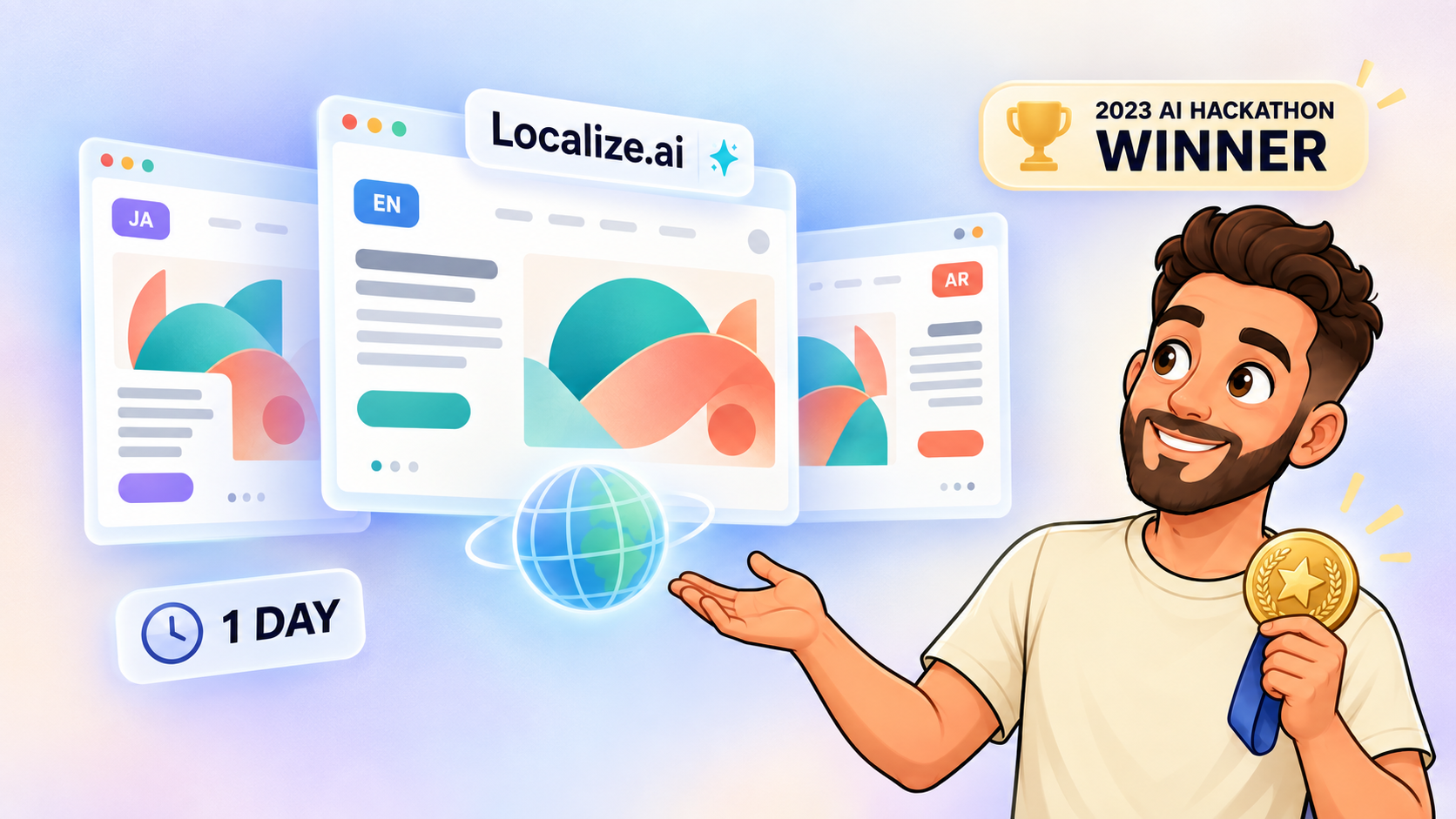
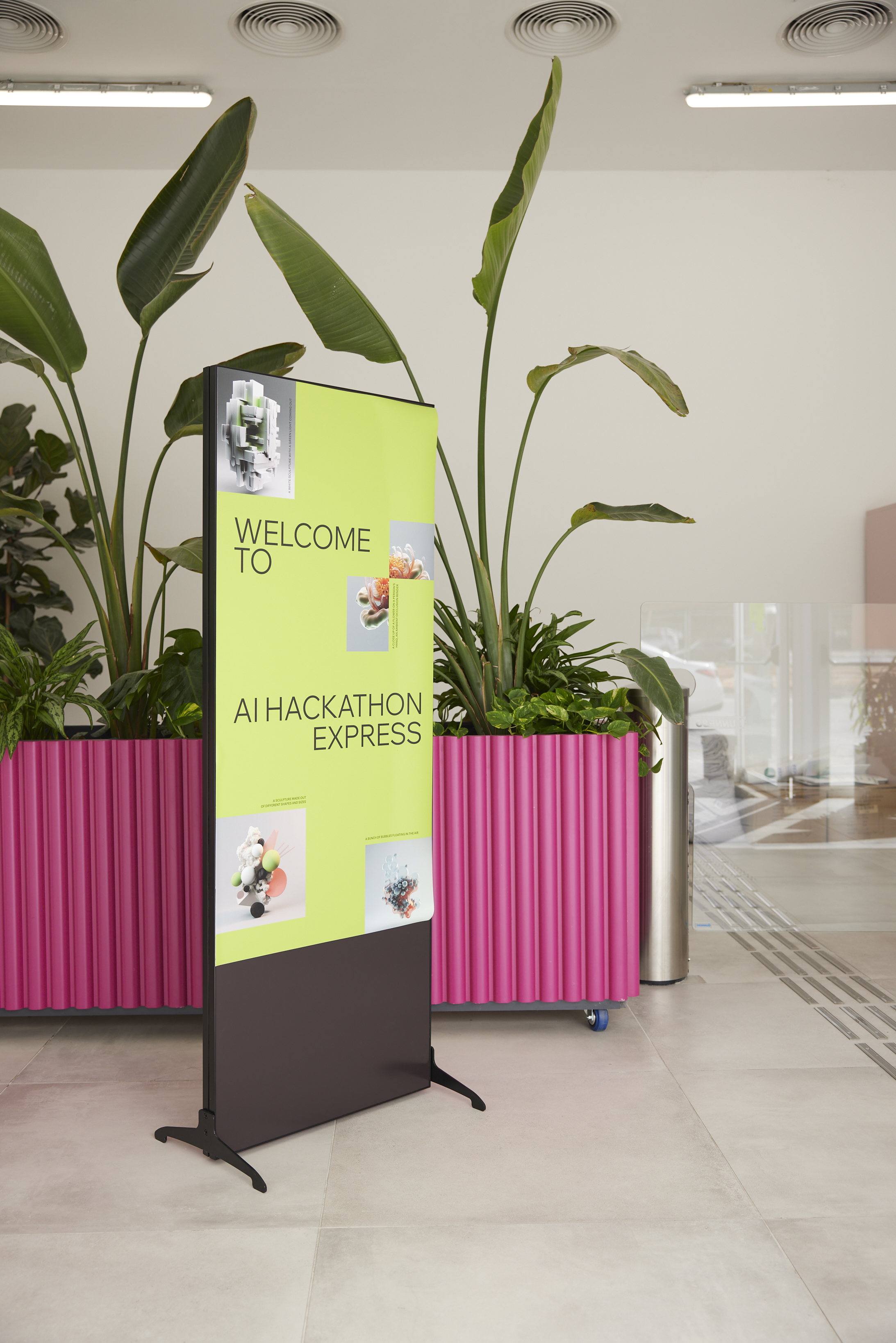
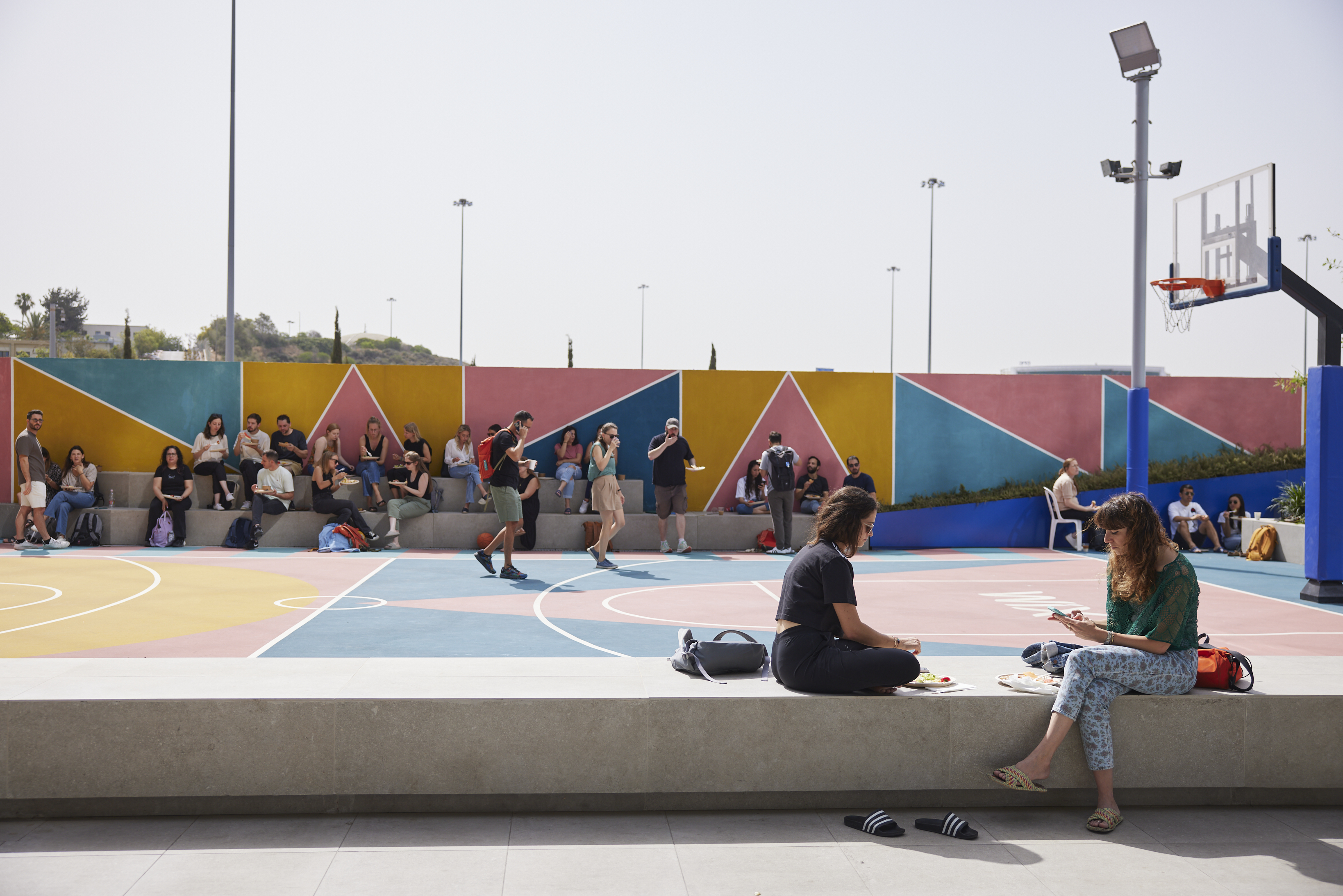
The energy on the Wix Campus on June 1st, 2023, was completely singular. Over 200 teams stepped away from their daily routines to explore the outer edges of artificial intelligence in a one-day AI Hackathon Express. Back then, the concept of "vibe coding" and seamless, instant AI iteration wasn't available at our fingertips. We had exactly one day to take a raw idea and brainstorm it into an innovative, viable concept that could be realistically implemented. The pressure was immense, but the shared adrenaline of rapid research, strategy, and architecture forged a deep sense of camaraderie within the Wix Multilingual Team. We weren't just working fast; we were completely immersed in the raw potential of what AI could mean for product design.
Our winning concept, Localize.ai, confronted a fundamental design truth: a user might know what success looks like in their home country, but they completely lack that intuition for markets like Japan, Brazil, or Kenya. By combining machine learning, text-generating AI, and Wix's internal success data, we created a concept that recommended localized cultural symbols, color palettes, and tailored layouts — not just translated text.
The local success paradox
We started with a simple premise: a user usually knows what a successful website looks like in their home country, but they are completely in the dark about what success looks like in Japan, Brazil, or Kenya. Design is fundamentally cultural. For instance, the prominent red color scheme used by Alibaba symbolizes luck and prosperity in China, while Rakuten utilizes a mix of vibrant colors that feel energetic and attention-grabbing to a Japanese audience. We realized that simply translating text wasn't enough; true localization requires adapting typography, color palettes, layout navigation, and UI components to match regional design standards.
Building the success data engine
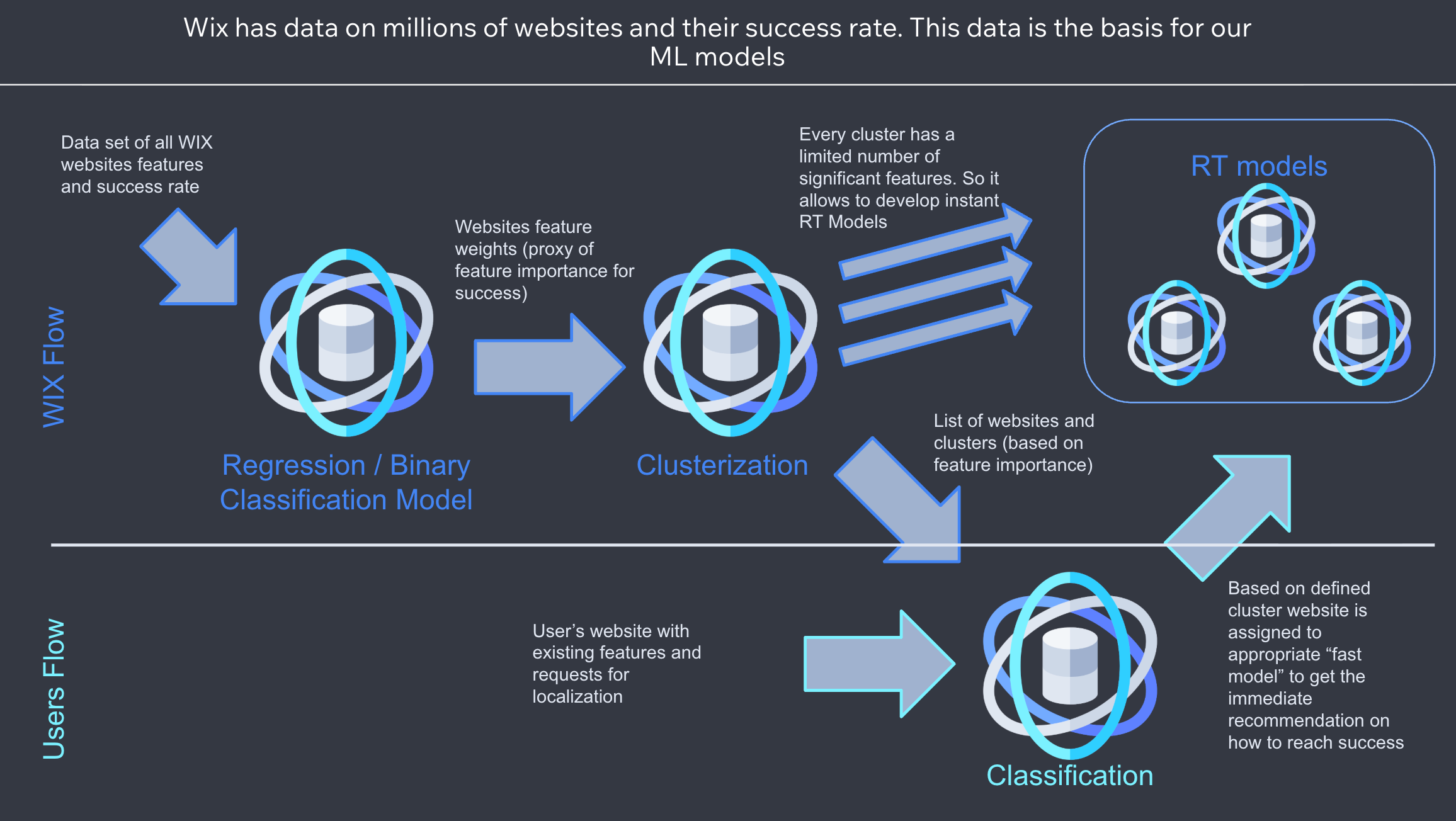
Localize.ai was designed to bridge this cultural gap by combining machine learning, text-generating AI, and Wix's vast internal BI data regarding successful sites across different locales and industries. We envisioned a flow where a user looking to expand their business globally would receive bespoke design candidates. Under the hood, a real-time model would output specific recommendations for everything from localized cultural symbols to optimized menu structures. From there, users could rely on ChatGPT-powered prompts to generate and fine-tune their written content to perfectly match the desired tone and formality of their new market.
The competitive edge of AI collaboration
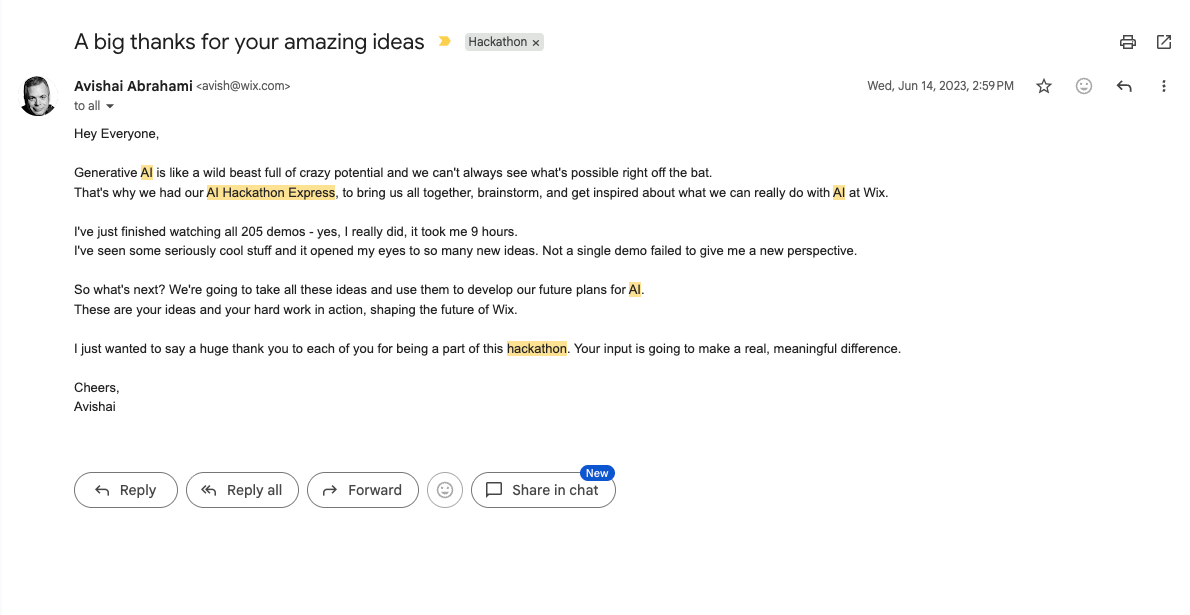
Pitching our concept to Wix management during the Grand Finals was a defining moment. Out of 205 submitted projects, Localize.ai secured 3rd place in the Wildcard category (Track 4).
AI is not here to replace our design instincts — it acts as an incredibly powerful creative partner that scales our empathy across borders.
Our team — including Ronit, Roei, Itay, Yuval, Jonathan, Gil, Eliav, Bar, Anton, and Andrei — proved exactly that.